
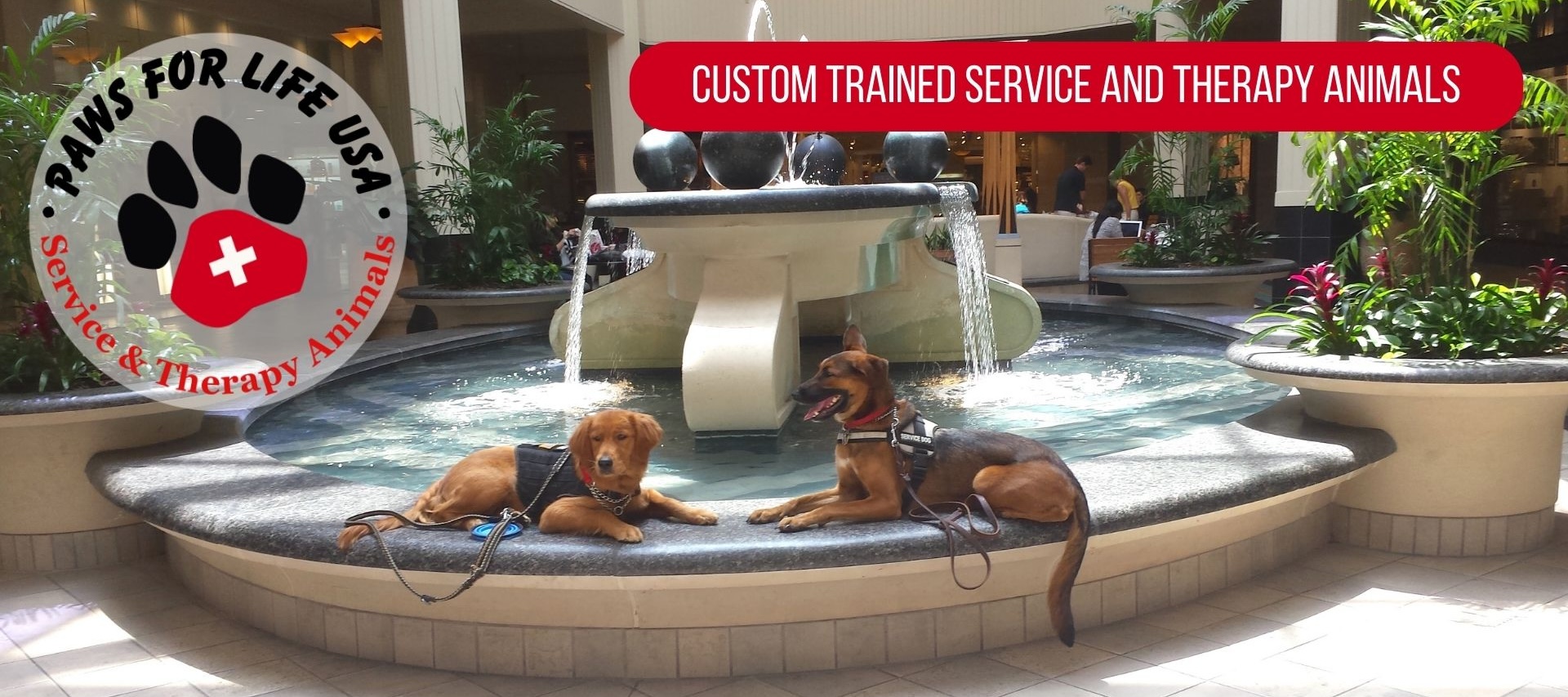

Social|Therapy Dogs
Social/therapy animals provide emotional support in places such as elder care facilities and hospitals. These animals do not have the same legal status as assistance/service animals and are not mentioned in the ADA. Many visiting therapy dogs help physically stimulate people in nursing homes or assisted living facilities by playing ball, being brushed or petted, and going for walks. Although many therapy animals are dogs, any type of animal that is good natured can be used to provide these services. Some animals, including horses, help in reaching people that were once thought unreachable.
There are two different types of therapy dog programs available through Paws for Life, and either option – if not both – may be a good fit for you and your dog.
Therapeutic dogs, commonly referred to as “therapy dogs” – is the most widely used method of animal therapy. These dogs are trained household companions that together with their handler visit nursing homes, hospitals, retirement homes plus many other facilities to offer comfort and joy that can reach beyond traditional forms of healing and medical treatment. The power of a dog can be amazing.
Animal-assisted therapy dogs assist physical and occupational therapists in meeting specific goals or “measured results” important to a patient’s recovery. These dogs are used to help anyone suffering from a stroke, physical injury, or trauma. AAT (animal-assisted therapy) dogs and their volunteer handler team up with trained therapists to use agility equipment and recreational therapy techniques. The end result encourages a patient to regain mobility, strength, range of motion, balance and confidence.